
Flora
23
July
2026
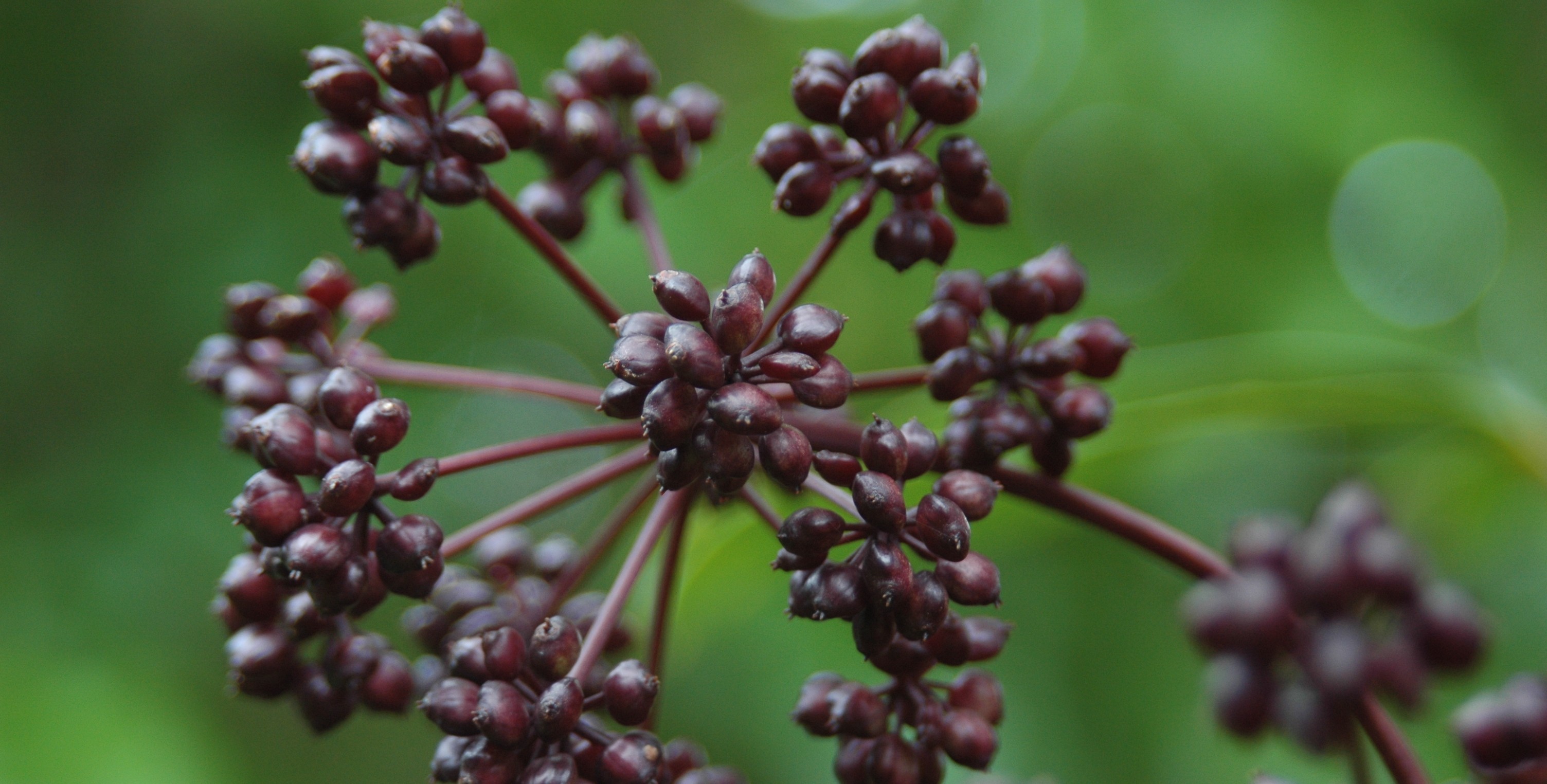
Puahou, or whauwhaupaku, is one of Motutapu’s key pioneer species. A member of the five finger family, it withstands strong wind, dry conditions and even part shade, making it ideal for native reforestation on Tāmaki Makaurau’s Gulf Islands.
The hand-shaped leaves can, in fact, hold up to seven “fingers”, and are leathery in texture with heavily serrated edges. It grows up to 8m tall and has small but distinctive flowers and seeds.
As a food source, puahou has no appeal for humans. Even the ripest of its fruit are extremely bitter. It is a wonderful food for a wide range of nectar-eating and gathering birds and insects.Its frui,t as they ripen over a long season, attract tūī, korimako/bellbirds, kererū, kākā, kākāriki, tīeke/saddleback, hihi/stitchbirds, kōkako and tauhou/silvereye.
Māori had a number of uses for this tree but perhaps the most remarkable involved transporting heavy objects such as waka overland. Branches of puahou were placed on the ground beneath, exuding a slimy substance which helped to provide a slipway.
The five fingers are represented on Motutapu by two other members of this important plant family; patete/seven finger and houpara. These are all important species for MRT, helping expand the thriving forest on Motutapu.
